UltraNova
- Arrived
- 2010
- Keys
- 37, full size, with aftertouch
- Hands on
- Eight touch-sensitive encoders and a filter knob; touch one and the screen shows what it does
- Also
- A USB audio interface, a vocoder with its own mic input
The UltraNova (2010) and the MiniNova (2012) are still on stands and in studios. RealFeel Nova runs their own firmware in software, so we can measure every sound they make, keep it exactly as it is, or clean it up. Then it hands the real synths a set of editors made for how people work today.
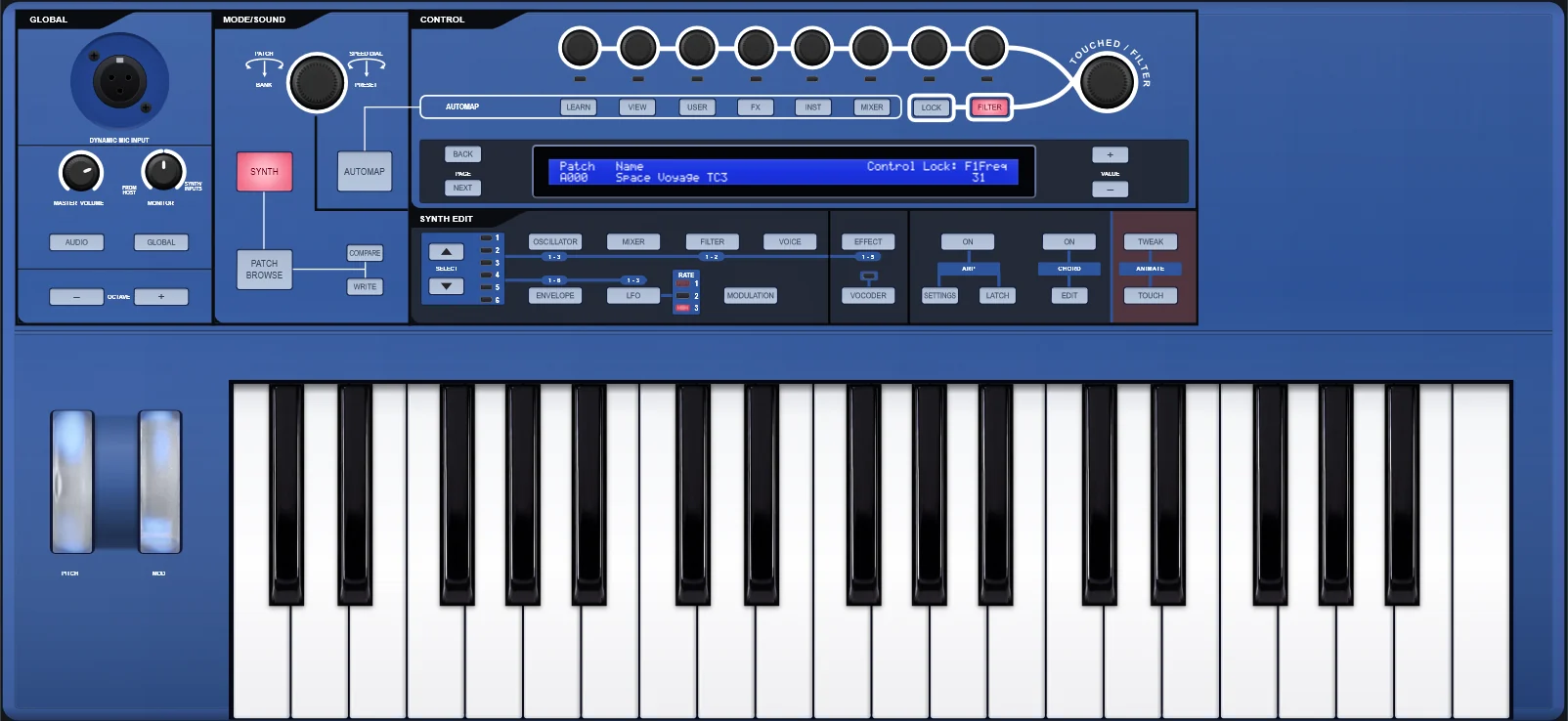
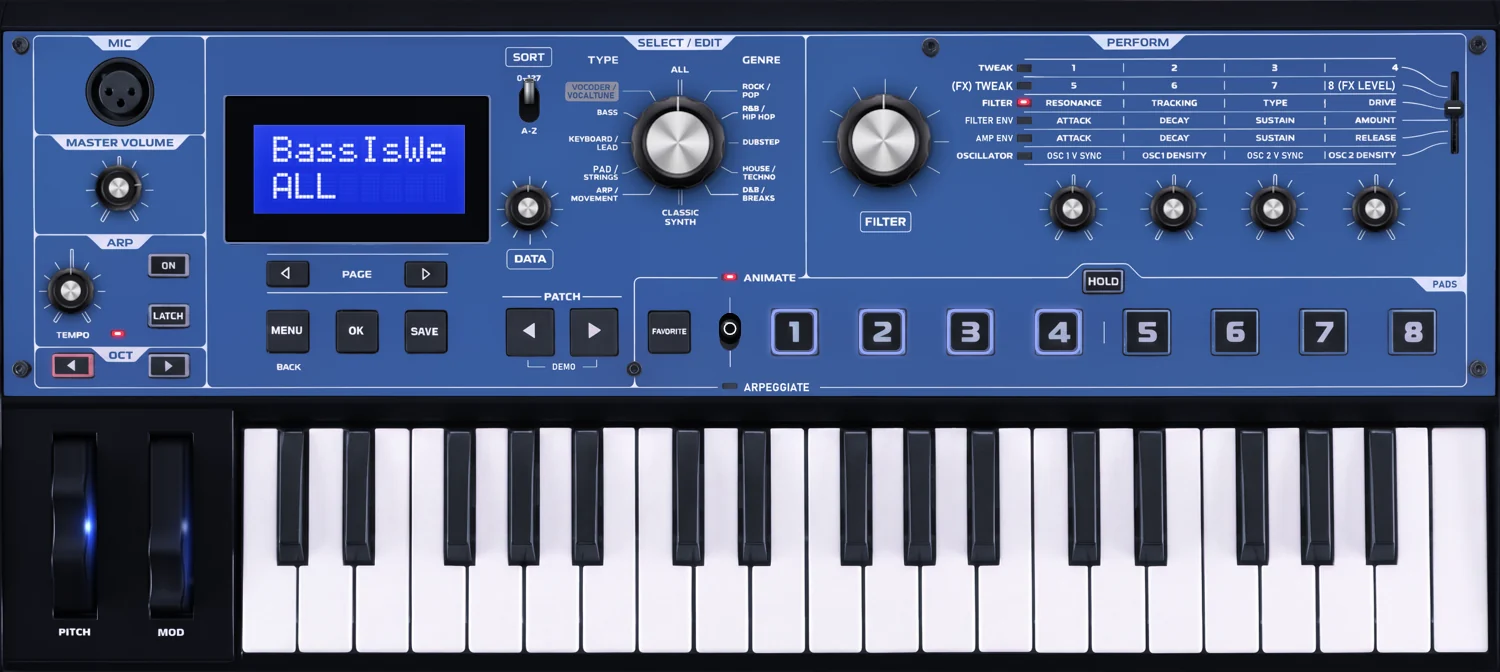
Both panels are the emulators' own drawings, not photographs. The maker's logos are left off: this project isn't Novation's.
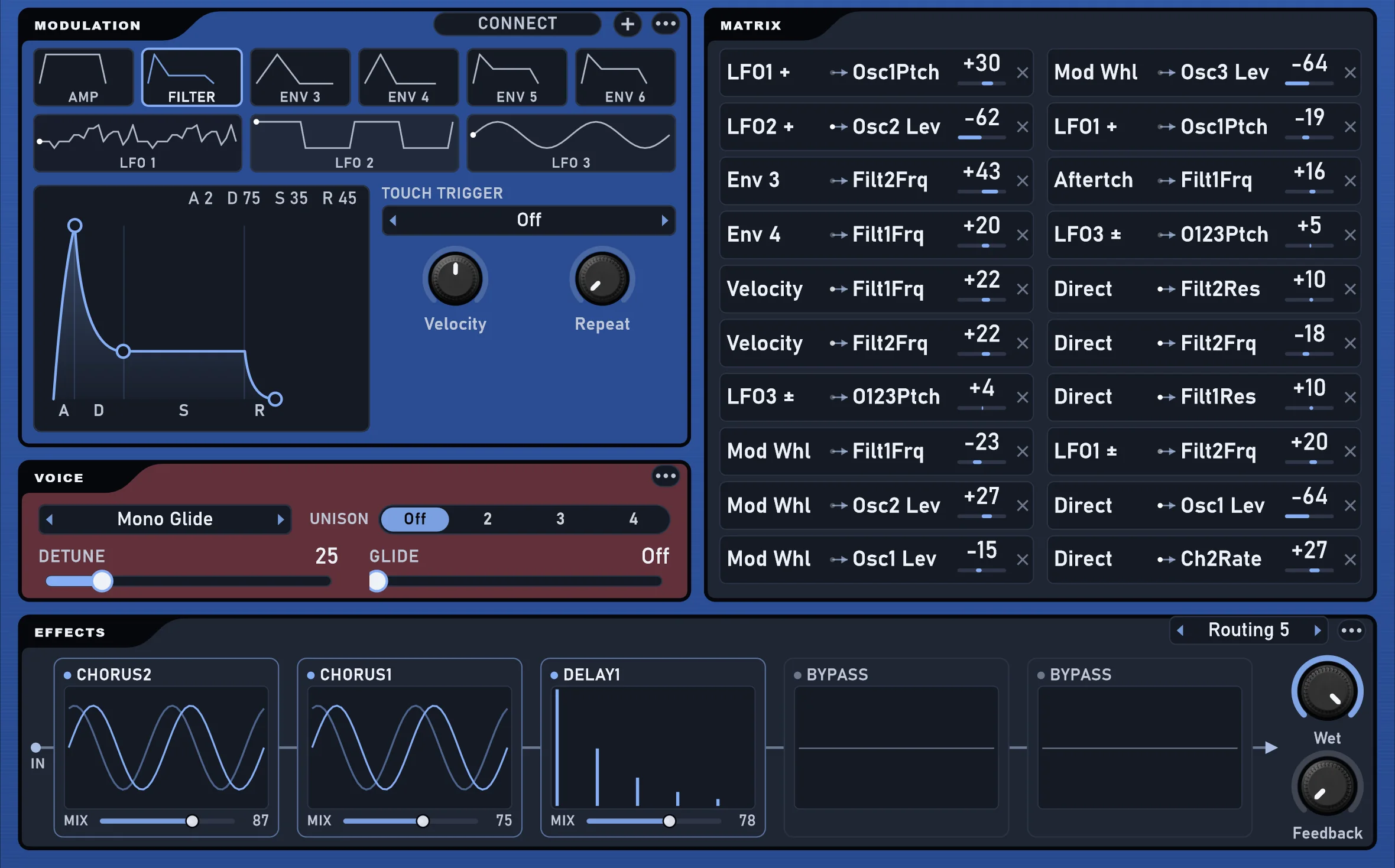
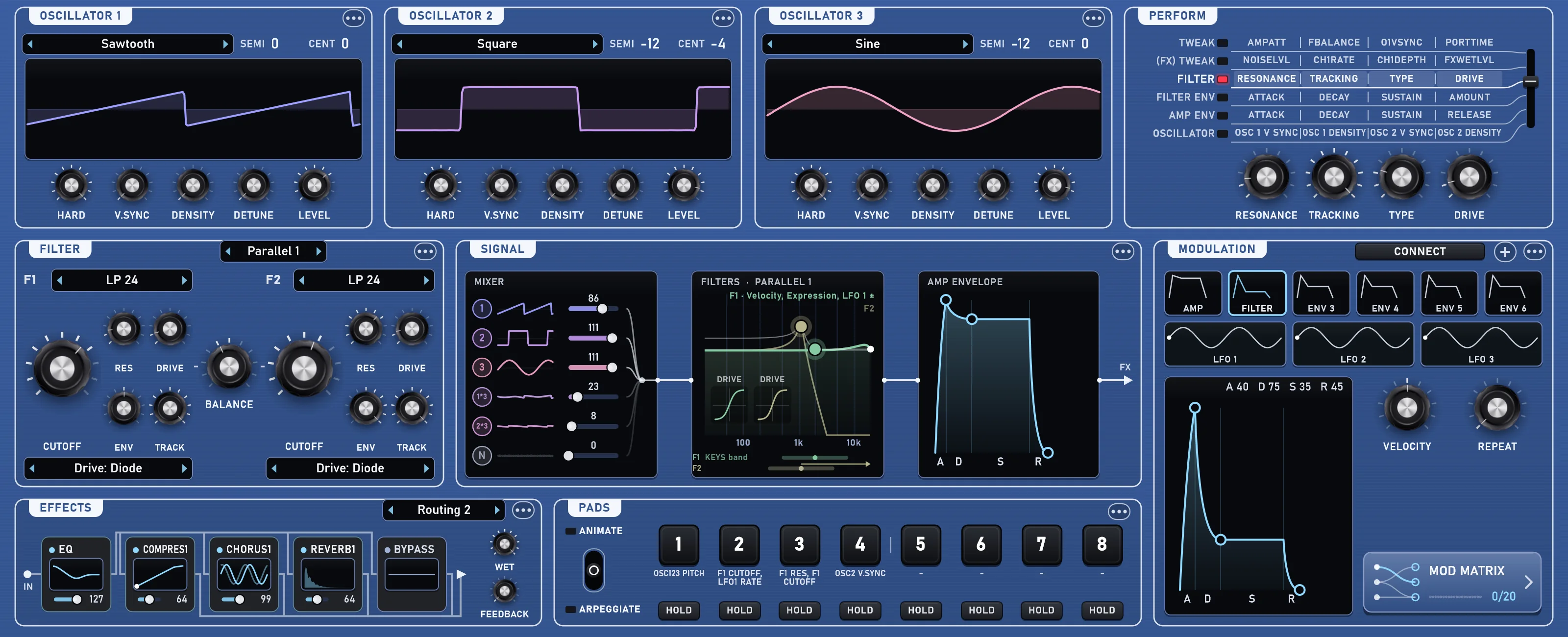
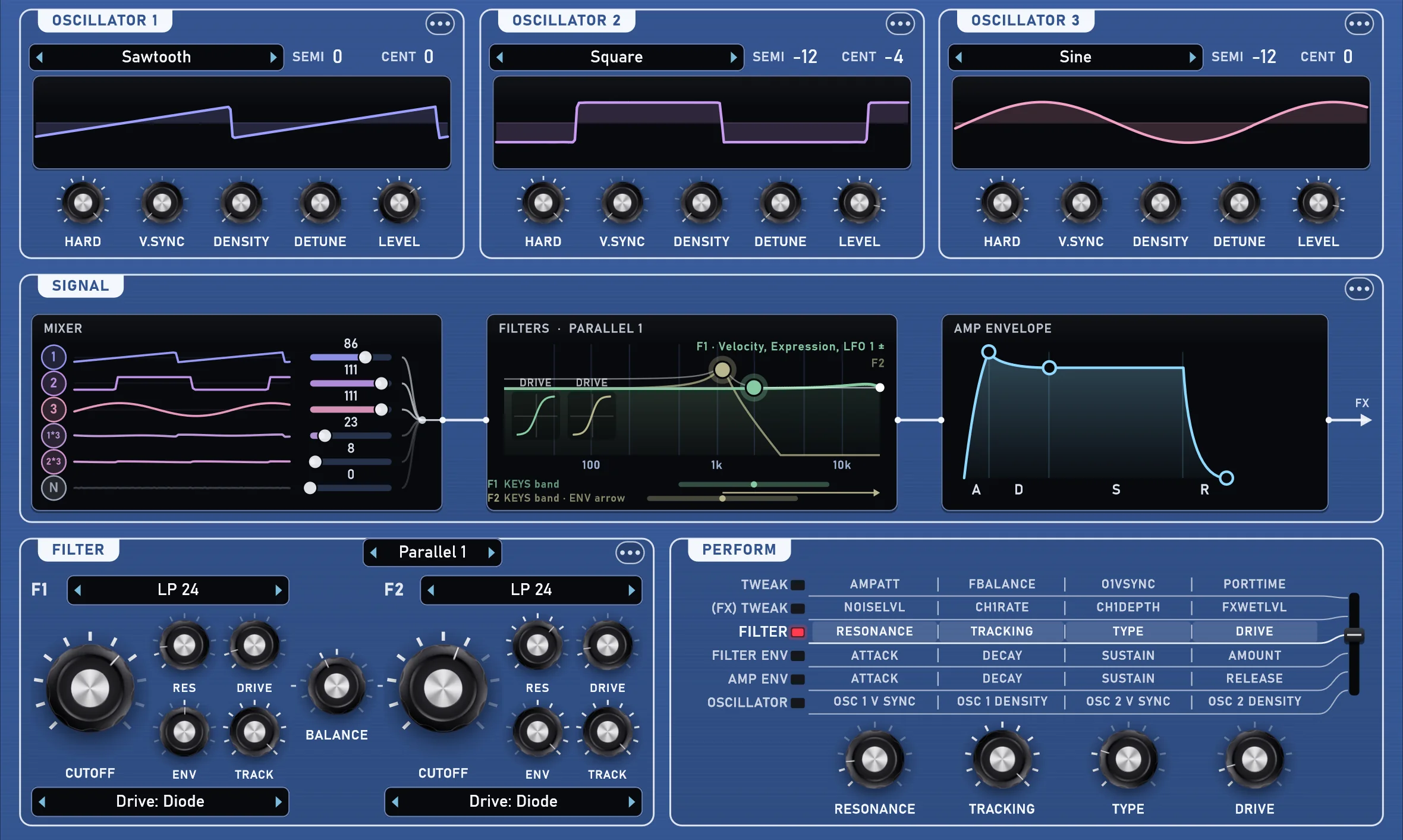
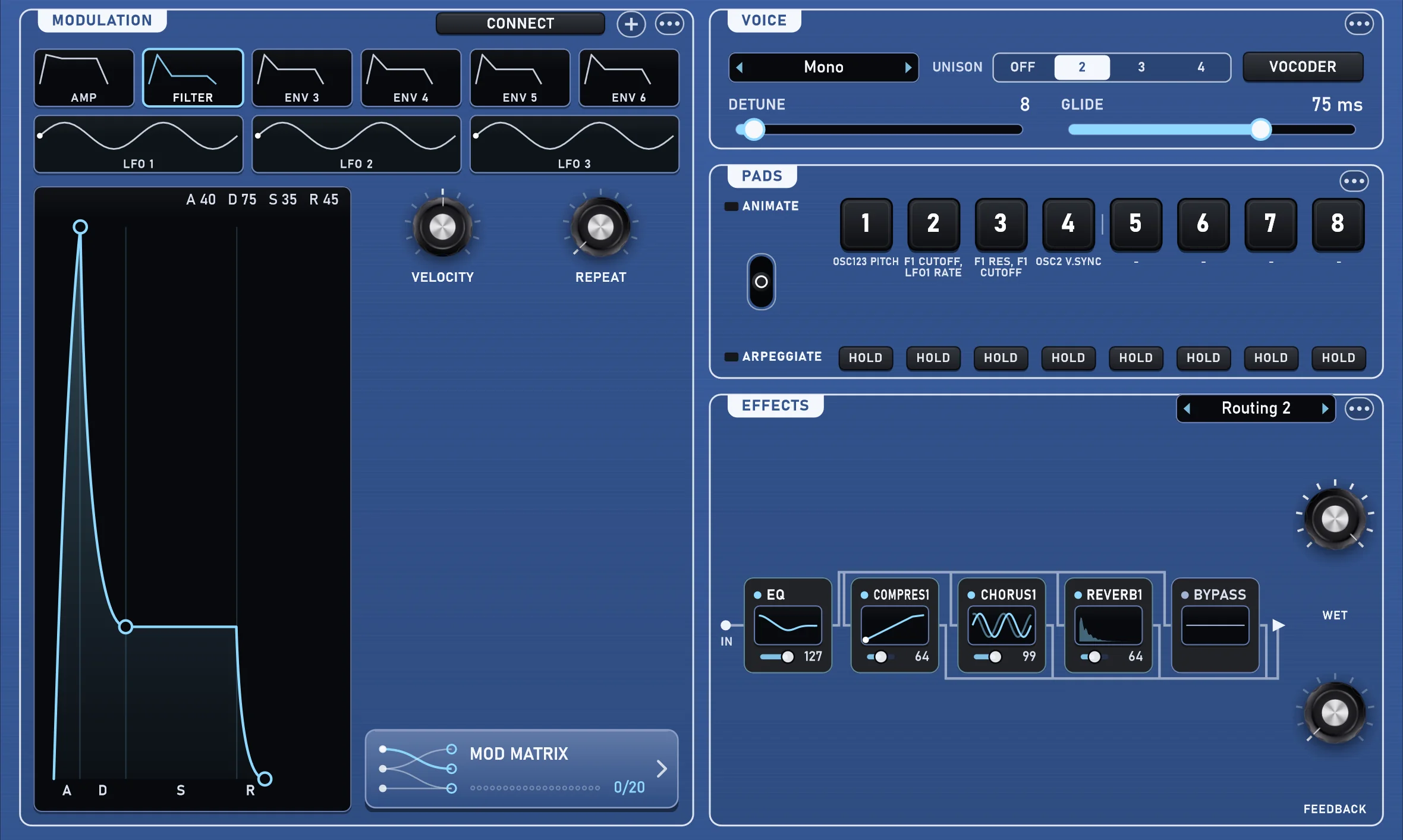
Novation built both around one deep digital engine: three oscillators a voice with 36 wavetables, two filters with drive, six envelopes, three LFOs, a 20-slot modulation matrix, a vocoder and a chain of five effects. The UltraNova put it in a compact keyboard with full-size keys; the MiniNova packed it into something you could carry under one arm, with a gooseneck mic and pads for playing it live.
The first thing on the list above, made visible. Each picture is a spectrogram: time runs left to right, pitch bottom to top, brightness is level. The curves that climb with the notes are the real harmonics. Everything else is aliasing. Start with a sawtooth gliding up four octaves.
Aliasing against the harmonics−9 dB−85 dB
The worst case on the synth. The wavetable oscillator runs at half the sample rate, so a mirror image folds around 11 kHz: the X across the middle. The steps where upper harmonics stop are the firmware choosing darker tables as the pitch rises; Modern makes that visible rather than causing it.
It reads the synth's own wavetables with the same weights and phases, at four times the sample rate (eight for the drive), and filters back down before anything reaches your ears. Below 20 kHz the tone is the original's; what's gone is what never belonged to the note.
Original stays the default, and it's checked bit for bit against the firmware after every change. Modern is a switch you choose, and it doesn't cost a single voice. It runs in the emulator: the synth's own DSP has no room for it.
Novation shipped operating-system updates for both synths as files you send to them over MIDI. Inside is everything the synth is: the program for its main processor, and the code for its DSP, the whole sound engine. Nothing had to be read out of a chip.
The update's container, cracked open: all 291 of its block checksums verify, and packing it again reproduces Novation's file byte for byte.
The chips identified and emulated: a Renesas H8S/2357 and a Freescale DSP56367 in the UltraNova, a Cortex-M3 and a Symphony DSP in the MiniNova. The firmware runs on them unchanged, about four times faster than real time.
Factory patches rendered and checked after every change: the Original sound stays bit for bit what the firmware makes. That check is why anything else can be trusted.
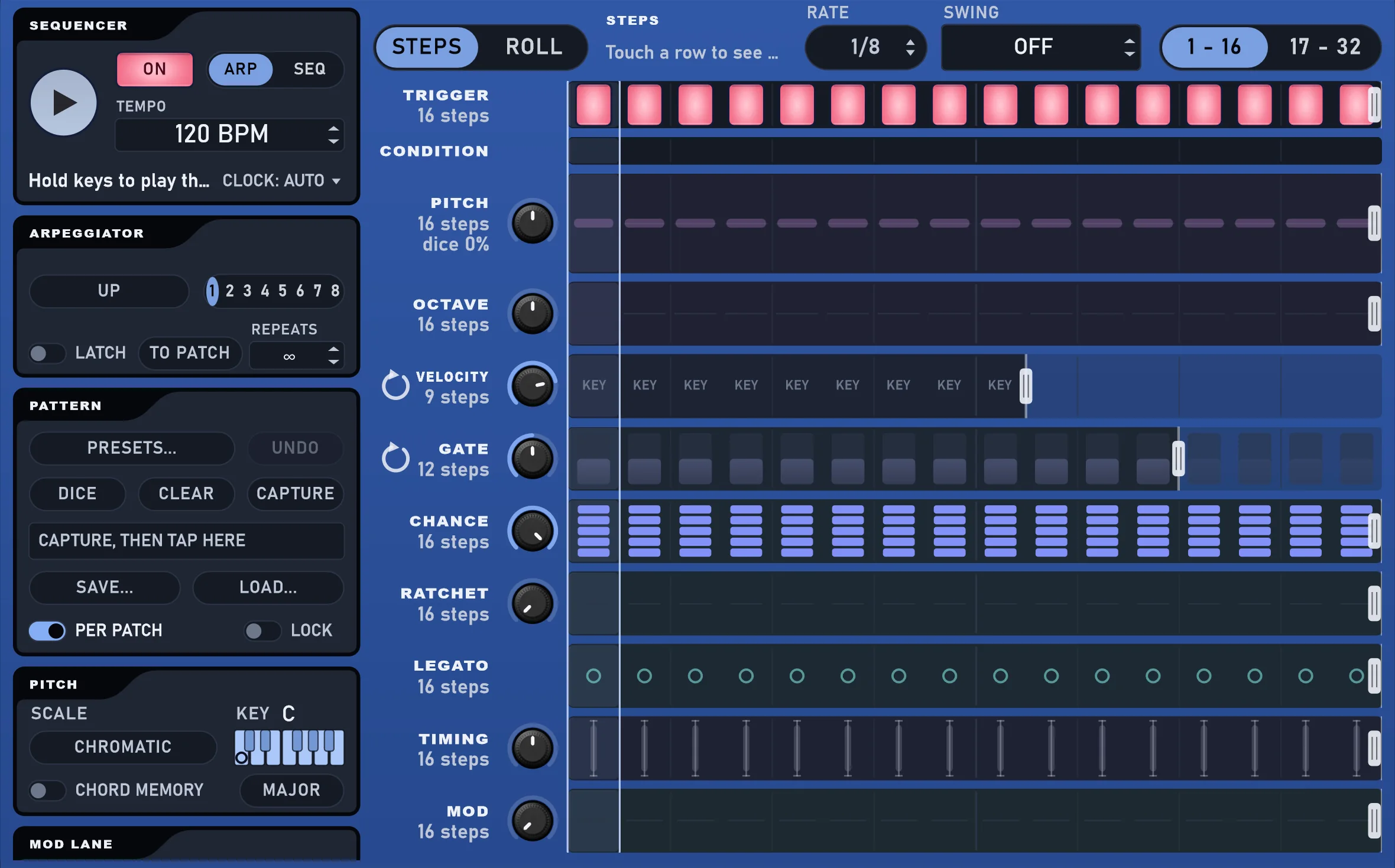
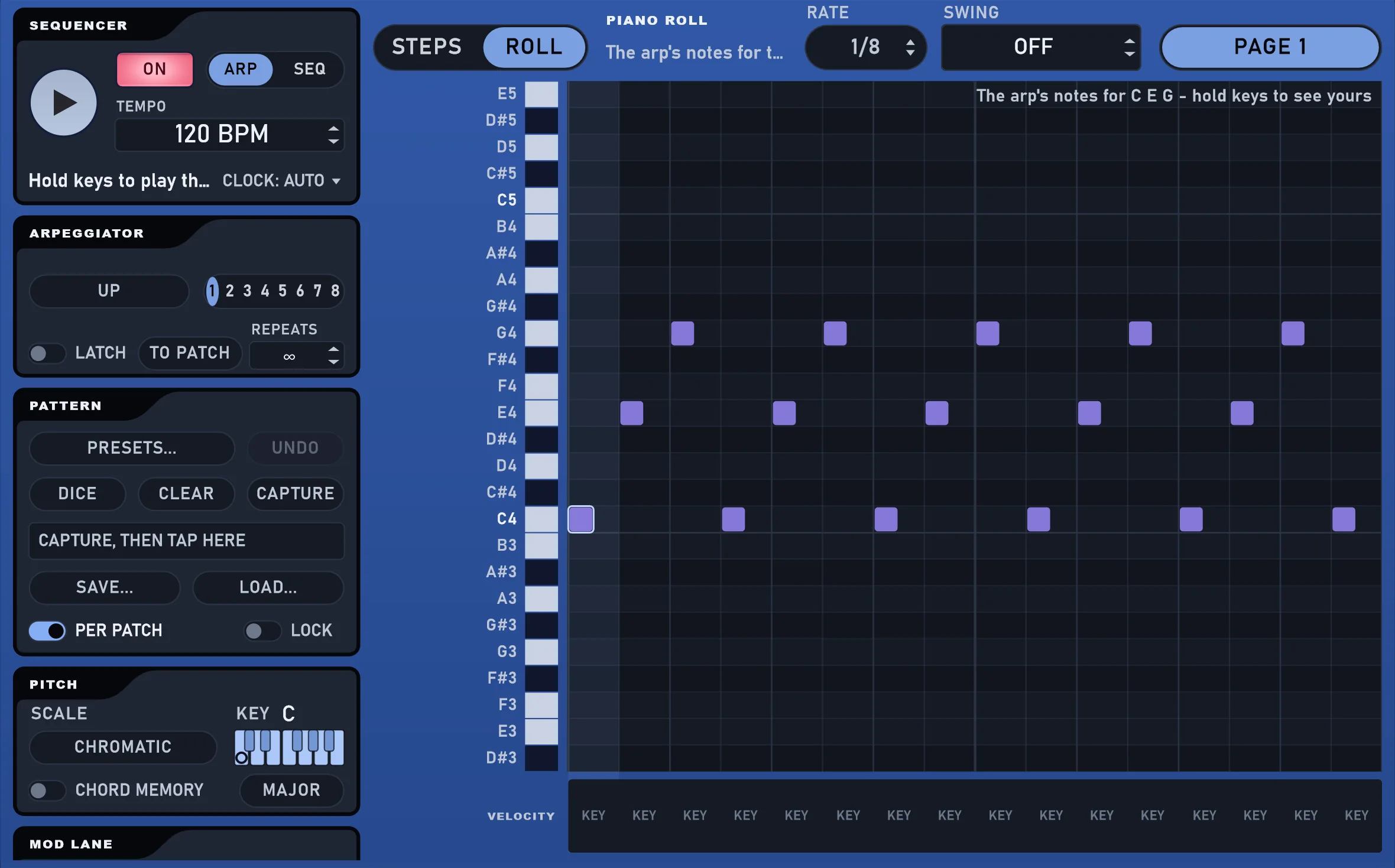
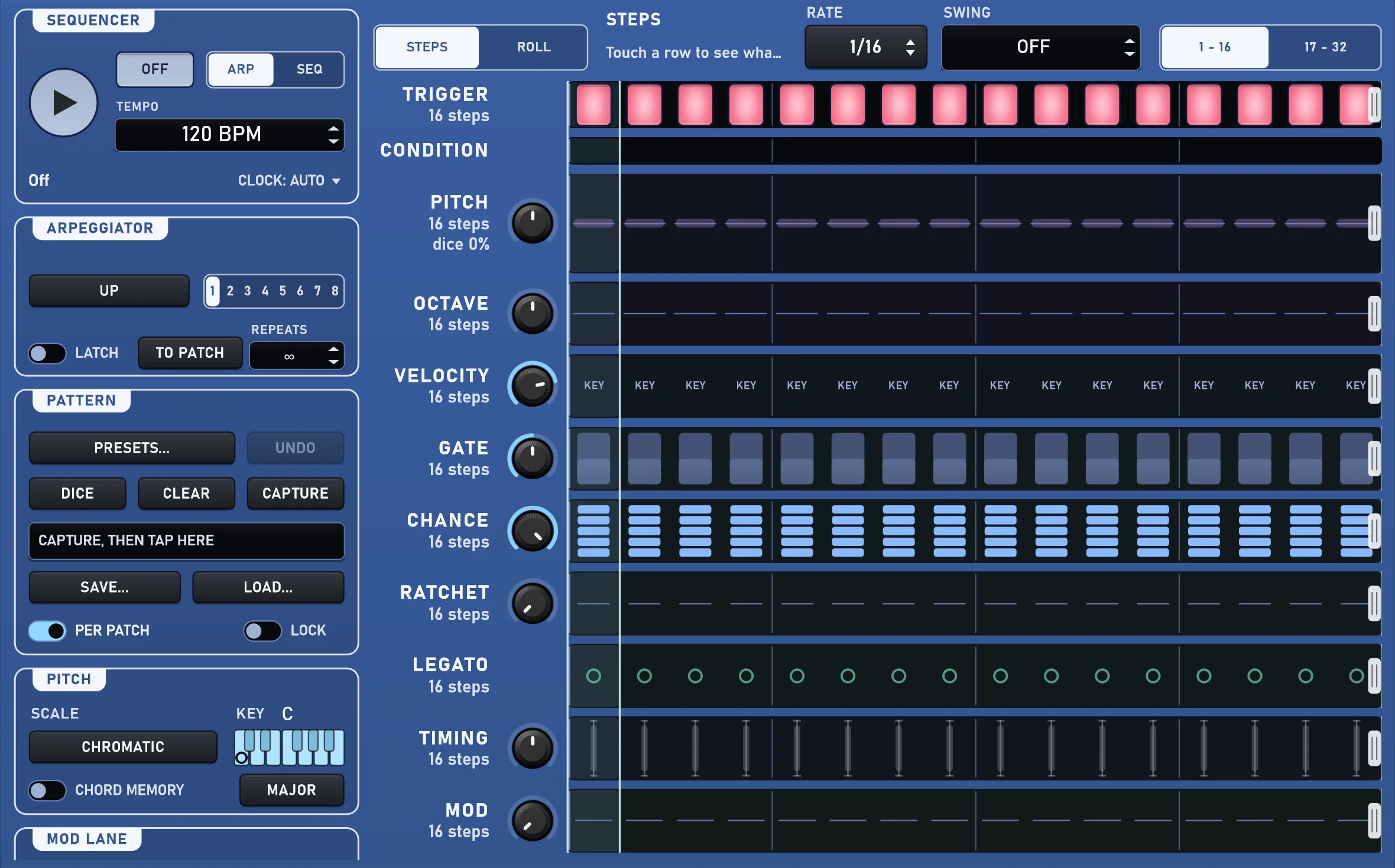
Only then: the oscillators and drive rebuilt to run cleanly, the effects mapped, editors and a sequencer built and tested against the emulator before they ever reach a real synth.
Because the firmware is the sound. A model made by ear is a sound-alike; running the code gives you the same voice allocation, the same envelopes, the same quirks, the same patches. And it makes the emulator the project's lab bench: you can measure exactly what the synth does, change one thing, and prove nothing else moved.
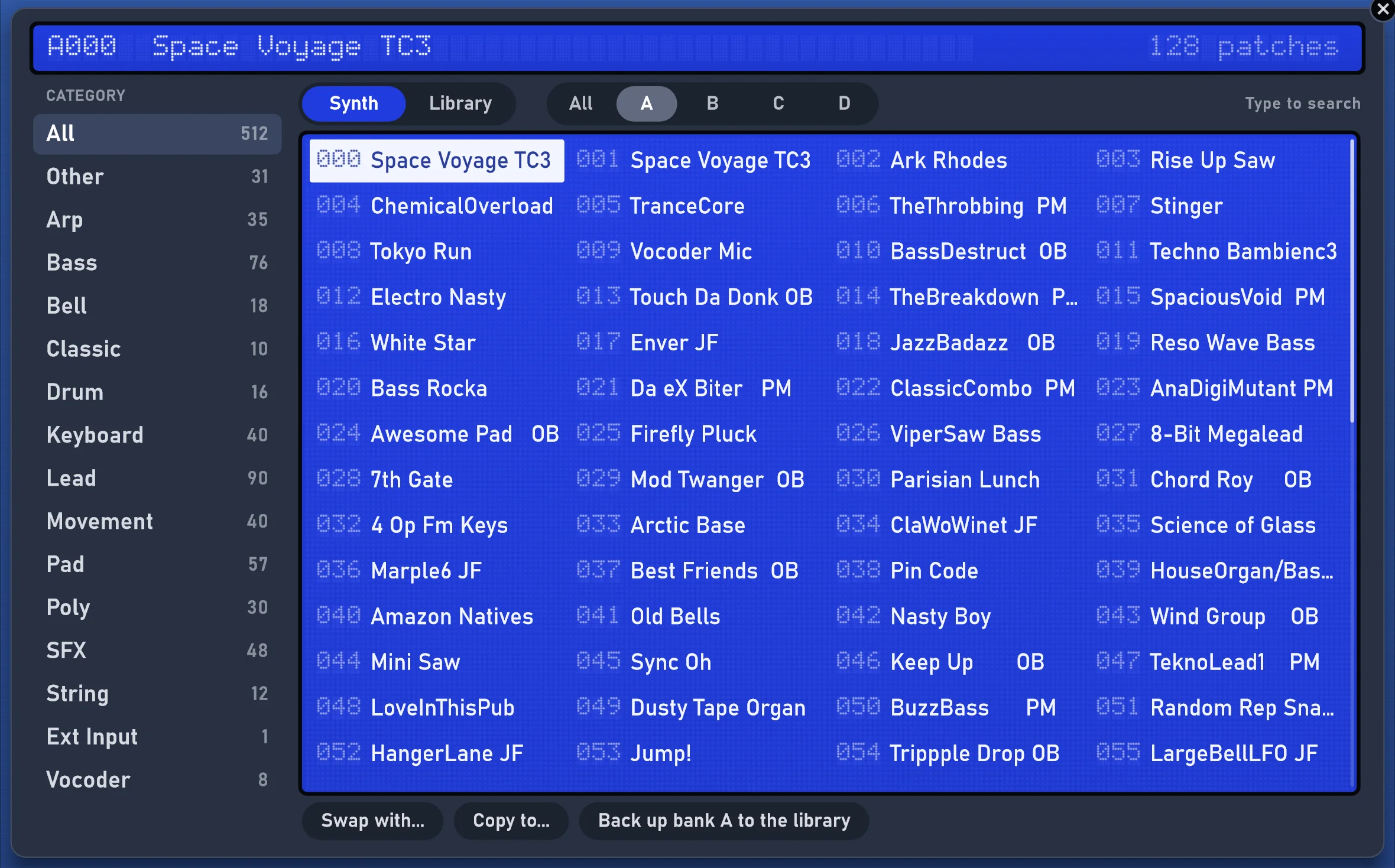
One app for both synths, on Windows and iPad. It talks to your real UltraNova or MiniNova over USB, or through a MIDI interface, and turns into that synth's editor: its own layout, its own controls, its own colours. No emulator needed for this part: it's your synth, its sound, its patches, and a screen big enough to see them.
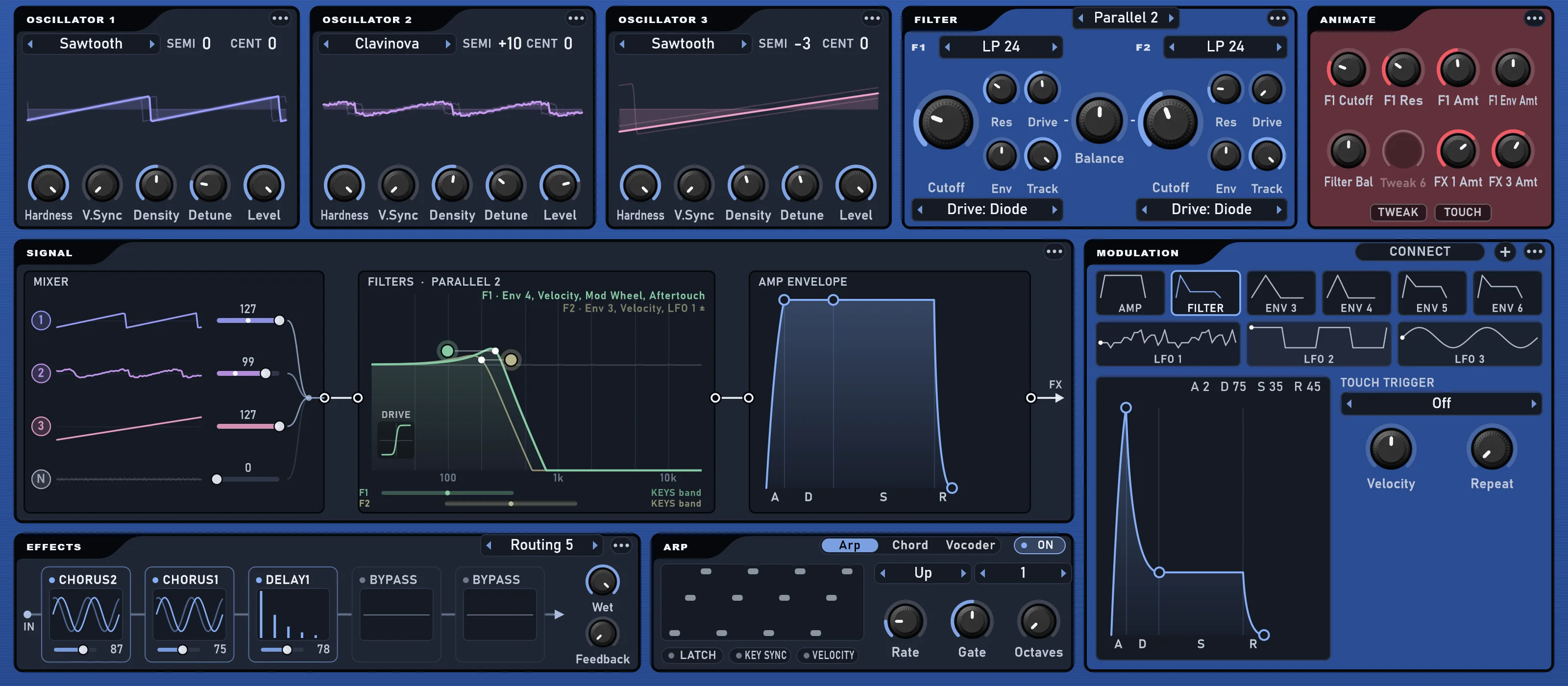
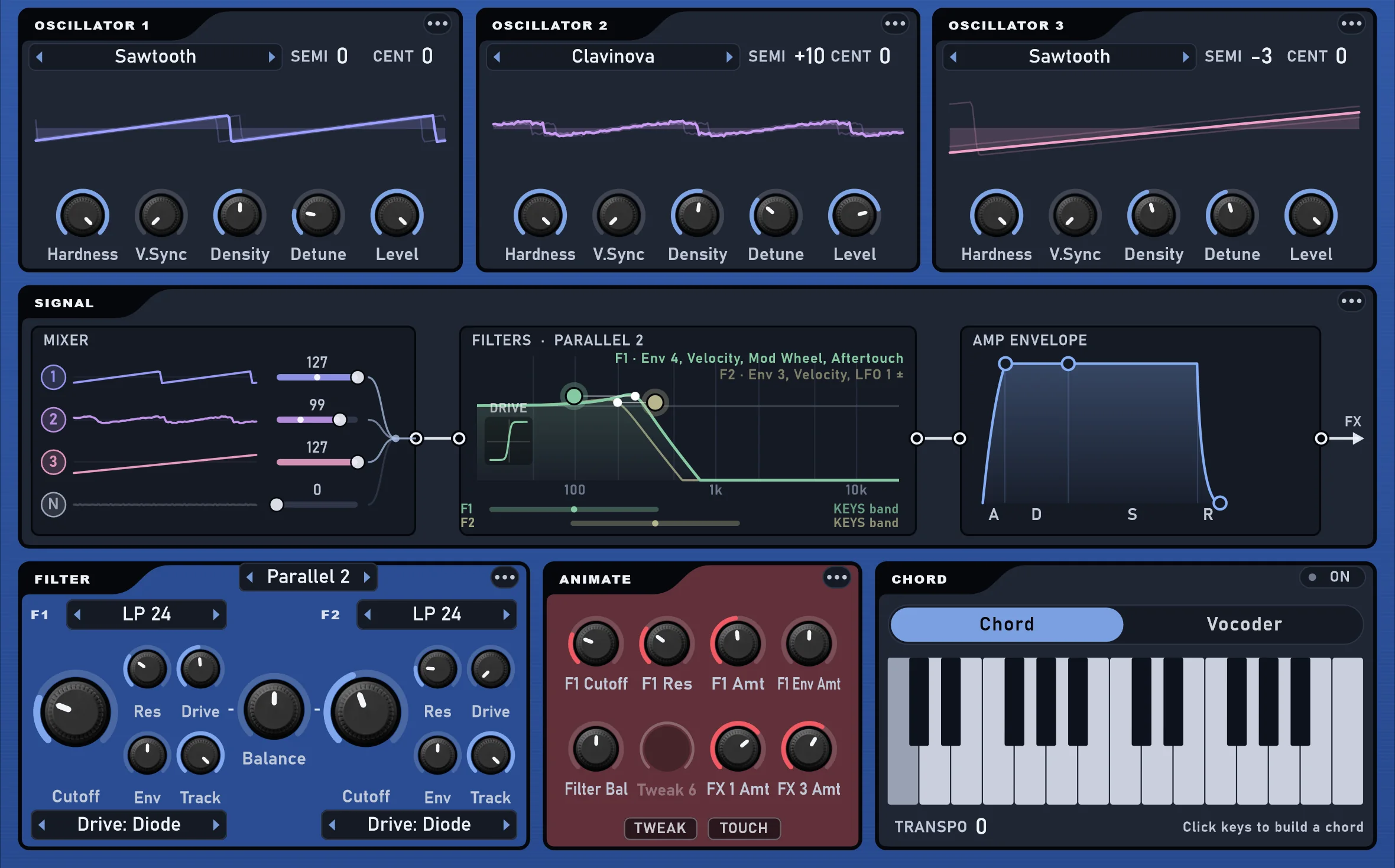
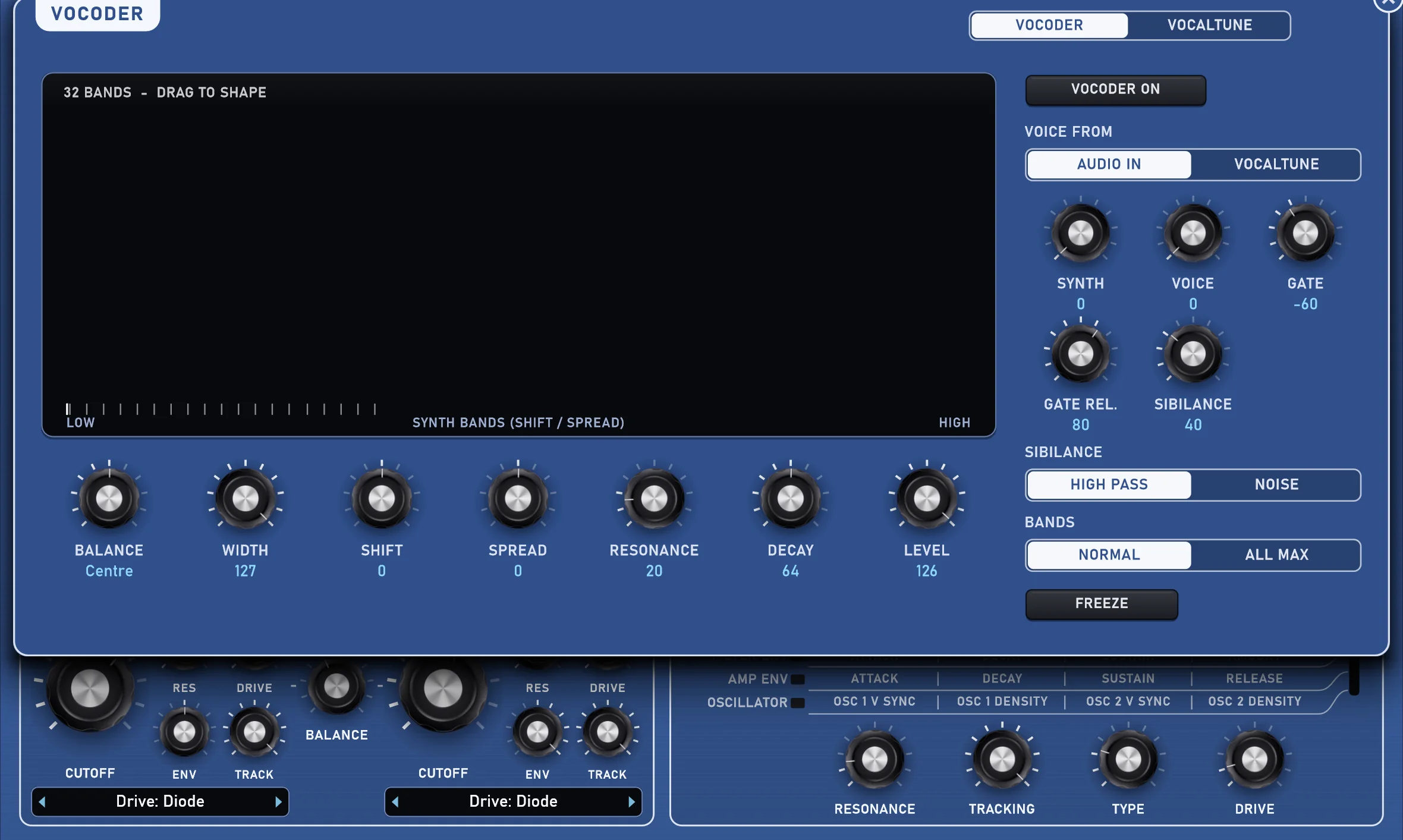
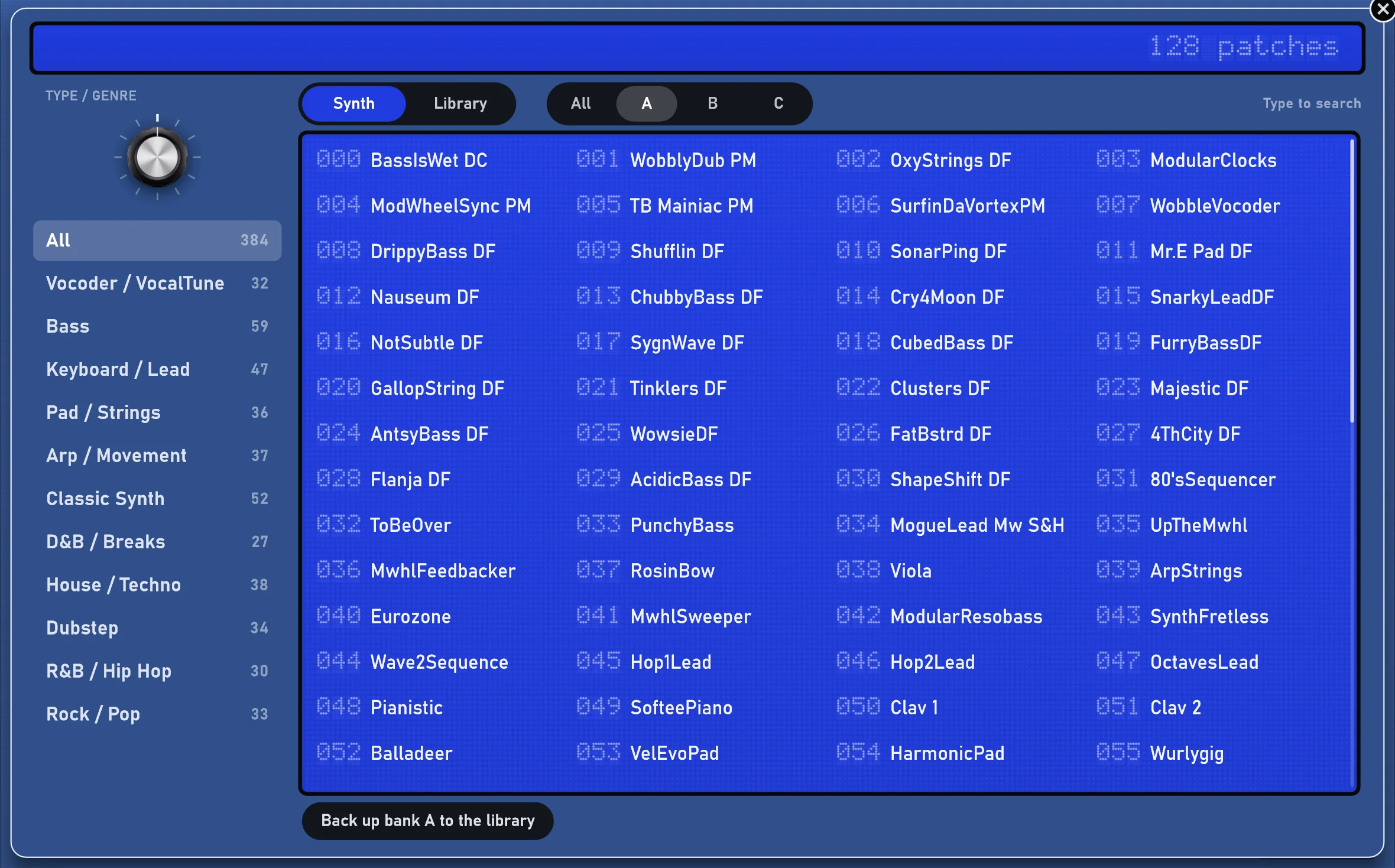
The editor is in testing on Windows and iPad. Leave your email and we'll write when there's a build you can run. One email address, which devices, nothing else.